“Our Gardens Are Losing Their Buzz.” Why a 74-Year-Old North Carolina Craftsman Is Letting Go of His Final Handmade Bee Hotels Before Closing His Workshop Forever

Something has gone quiet in American gardens - and most homeowners have no idea why.
Clayton Dawson, a 74-year-old craftsman at the foot of the Blue Ridge Mountains in Brevard, North Carolina, has watched it happen for 50 years. And now, as he prepares to close his workshop forever, it’s the one thing weighing on his mind.
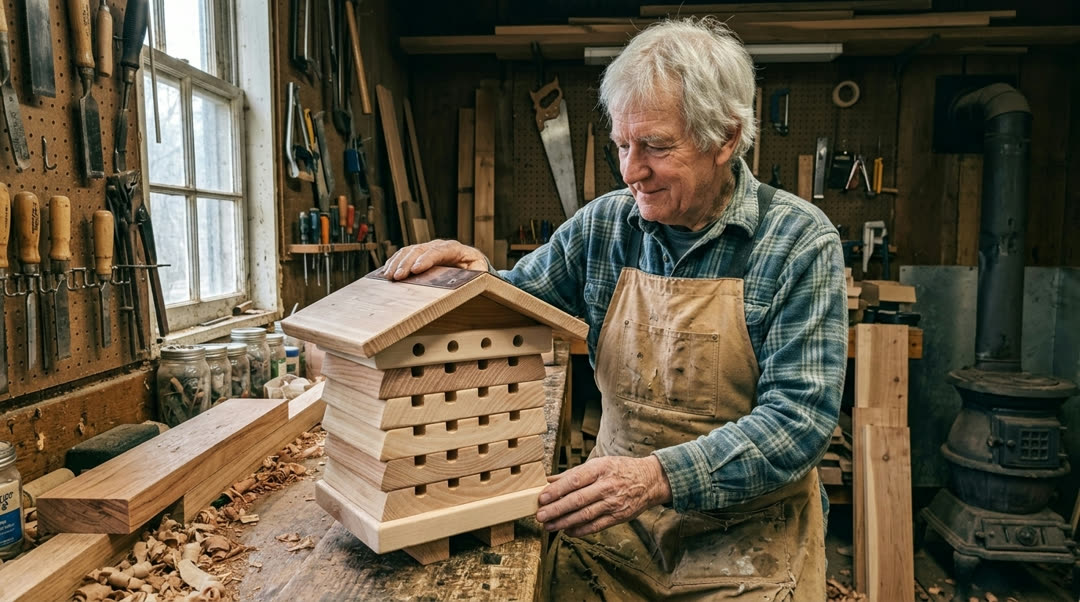
The workshop is small - no more than fifteen by twenty feet. Along the walls hang saws, planes, and carving tools. In the corner stands an old wood-burning stove, radiating a dry, steady warmth that fills the room with the rich, comforting scent of fresh-cut cedar.
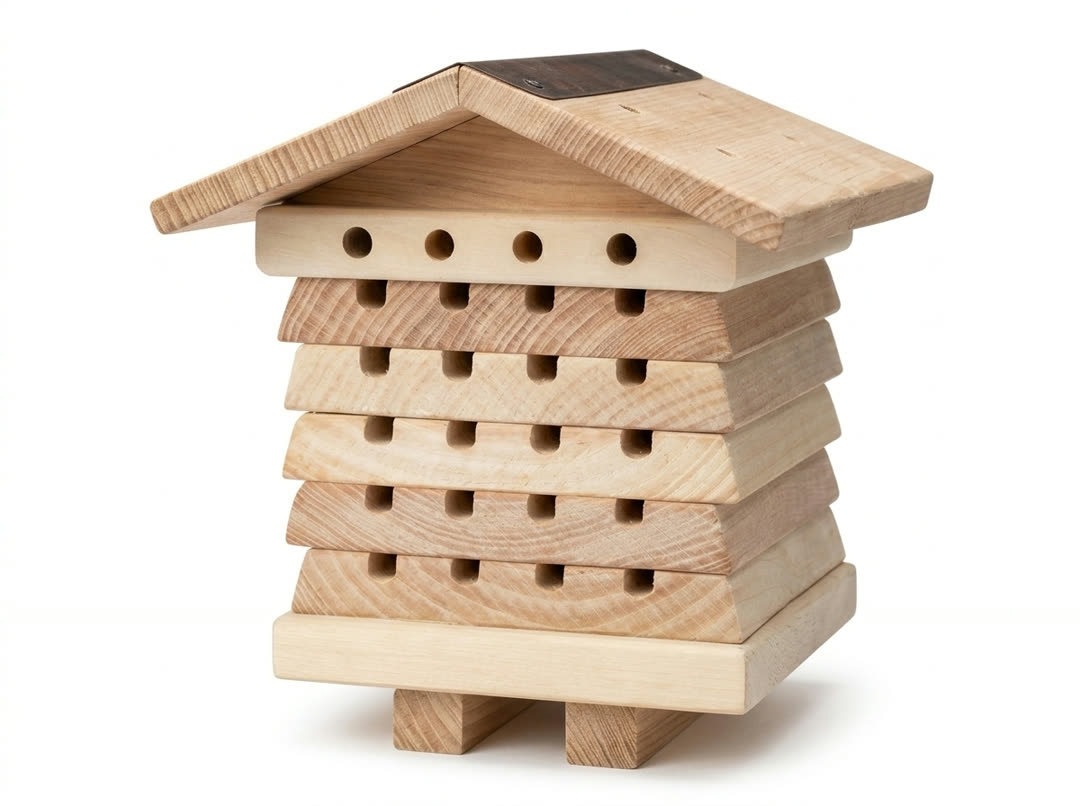
On the workbench stands a breathtaking, cabin-like structure that looks more like a piece of fine architecture than a garden accessory: a beautifully layered solid cedar bee hotel, capped with a gleaming, hand-fitted copper roof.
Clayton gently runs his hand across the smooth, untreated wood. “You know what matters most to me?” he asks without looking up. “Not the workshop. Not retiring.” He pauses, looking out the window at his garden. “It’s that it’s getting quieter outside. Every year, our gardens lose their buzz. And most people don’t even realize why.”
He is talking about the rapid decline of native, solitary pollinators. And the biological data confirms exactly what he has been witnessing for decades.
Most Homeowners Don’t Realize It - But Our Best Gardeners Are Vanishing
Over the past few decades, populations of native solitary bees - like Mason bees and Mining bees - have dropped dramatically. Unlike honeybees, these gentle, non-stinging creatures don’t live in hives. They nest alone in tiny wooden tunnels.
They also happen to be the world’s best pollinators. A single Mason bee can pollinate as many flowers as 100 honeybees.
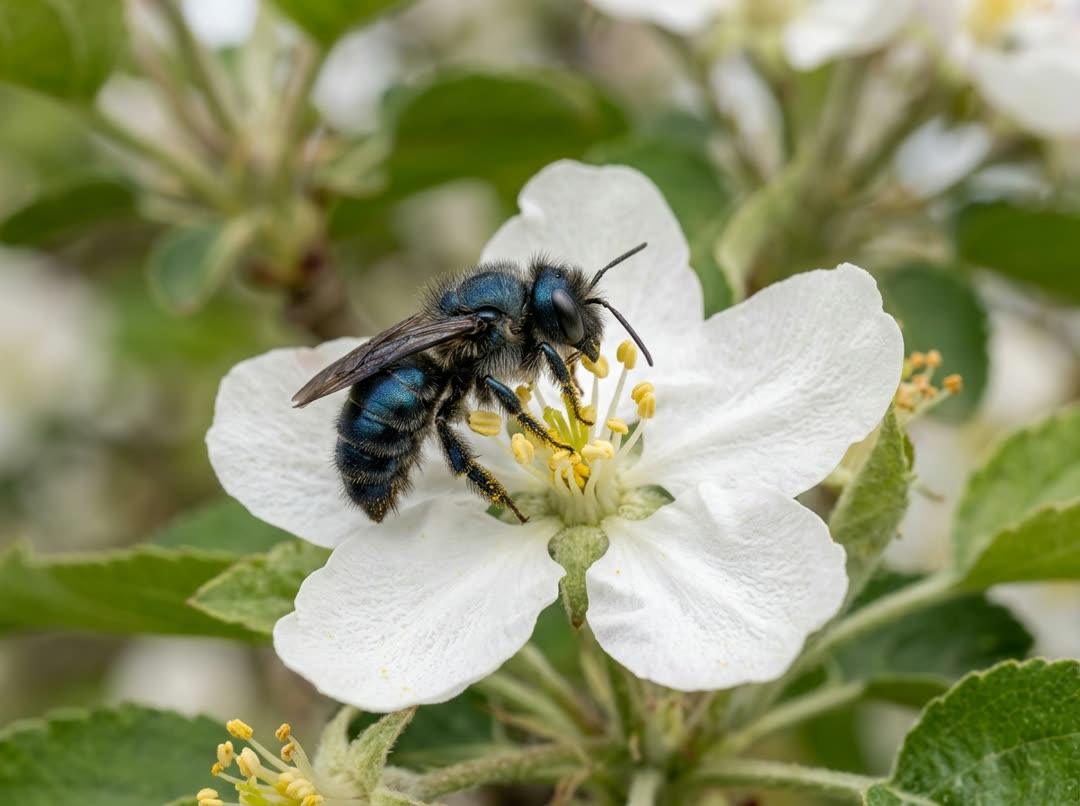
Yet modern landscaping is destroying their homes. Old trees with natural hollows are being cut down, and pristine, chemical-treated vinyl fences are replacing natural hedges.
“Twenty years ago, my garden beds were alive with gentle solitary bees by April,” Clayton says. “Now? People look at their flower beds and wonder why their fruit trees aren’t yielding and why their flowers look tired. It’s because the pollinators have nowhere to live.”
But what frustrates him most is this: eighty percent of the mass-produced “insect hotels” sold today are complete death traps.
The Toxic Truth Behind Mass-Produced Bee Houses
When asked about the cheap insect houses sold in big-box DIY stores, Clayton shakes his head in frustration. “People mean well when they buy them. But what they are putting in their gardens is cheap decoration - not a safe home.”
He listed the fatal flaws based on his 50 years of woodworking experience:
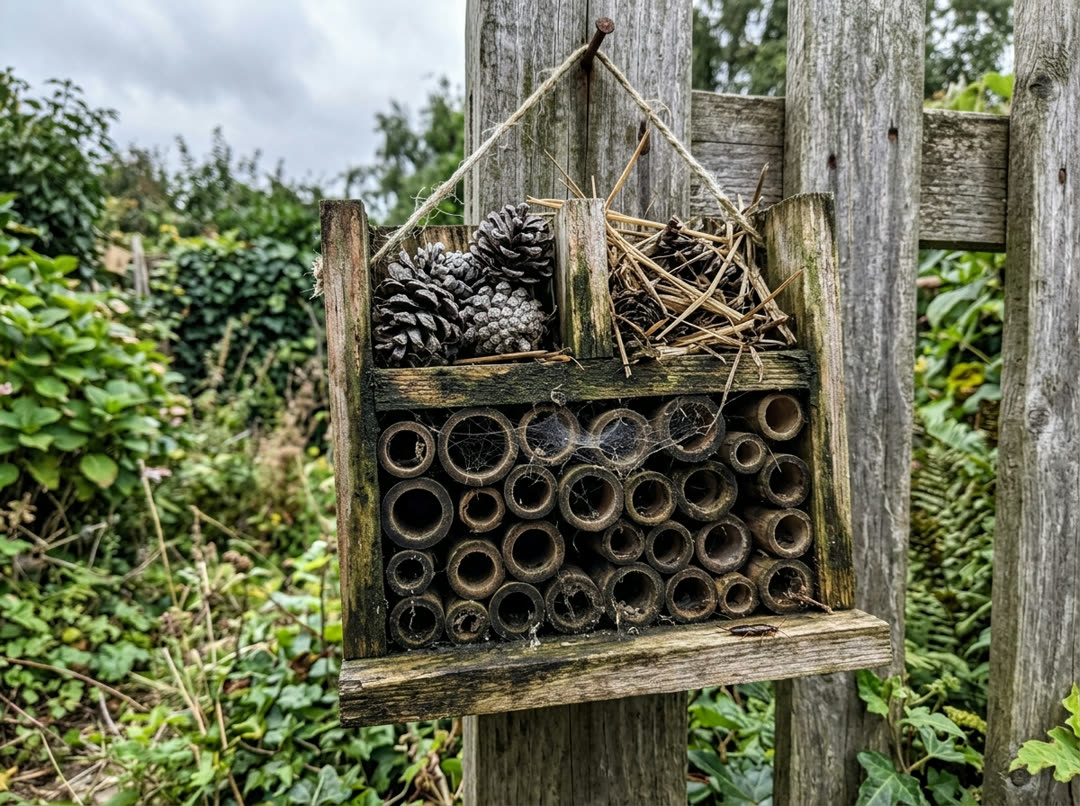
Toxic Chemicals & Varnishes: Many cheap imports are sprayed with chemical glues, paints, or varnishes to look pretty on a shelf. Solitary bees have an incredibly sensitive sense of smell. They will completely avoid a house that smells like chemicals.
Uniform, Rough Tunnels: Mass-produced houses use cheap bamboo tubes or plastic slots that are all the exact same size, often with splintered edges that tear the bees’ fragile wings.
Paper-Thin Walls & Leaky Roofs: Houses with thin, 10mm plywood walls turn into ovens in the summer and deep-freezes in the winter, destroying the larvae inside.
Heavy, Multi-Layered Protection: The Story Behind the Design
“For years, I watched people buy those flimsy, thin-walled wooden boxes to hang on their trees,” Clayton explains. “And for years, I watched those boxes fail. Real nature isn’t uniform. A proper sanctuary needs depth, weight, and multi-layered protection.”
That is why, in his final years, Clayton went back to the workbench. Not to design something new - but to build everything he’d learned over 50 years into one piece. He calls it the Blossoming Bees Bee Hotel.
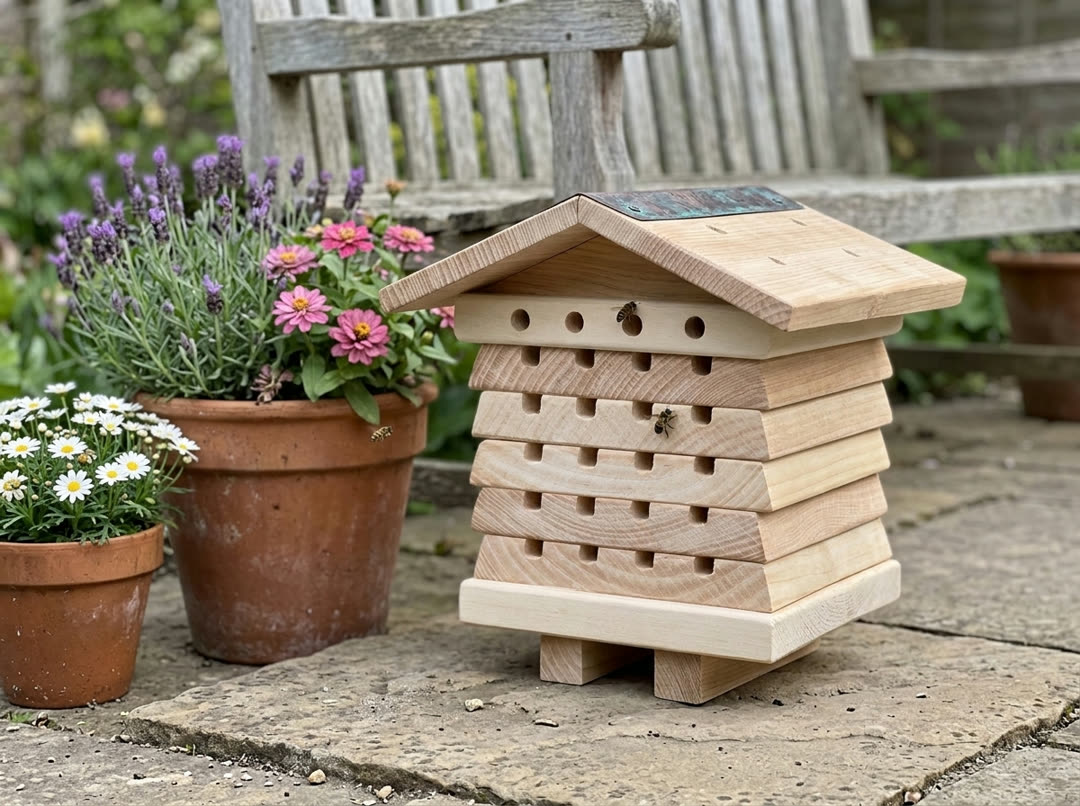
Instead of a hollow, mass-produced box, this sanctuary features a substantial, multi-layered chalet design. Clayton precisely mills each individual layer of solid, untreated cedar, stacking and interlocking them one by one. This creates thick, heavily insulated walls that protect the larvae from extreme weather.
Why the Blossoming Bees Bee Hotel Design Changes Everything
🐝 Multi-Layered Chalet: Precision-stacked cedar creates thick, insulated walls that block harsh wind and regulate temperature for vulnerable larvae.
🐝 Mixed-Diameter Tunnels: Custom-milled with varying hole sizes across every layer to naturally attract diverse native bee species.
🐝 100% Untreated Cedar: Naturally weather-resistant and rot-proof. Completely free of toxic glues, paints, or chemical varnishes.
🐝 Aging Copper Roof: Heavy copper cap deflects 100% of rain, maturing over time into a beautiful, rustic vintage patina.
🐝 3 Ways to Display: Ultimate versatility - set it on a flat patio slab, mount it to a wall, or hang it via the built-in steel hook.
Nature Approved: Over Two Decades of Success
Clayton opens a worn, leather-bound notebook on his bench. “The early prototype for this design,” he says, pointing to a sketch, “I built for a neighbor back in 2004. It has survived over twenty tough winters without a single drop of chemical stain. Why? Because solid cedar is nature’s armor.”
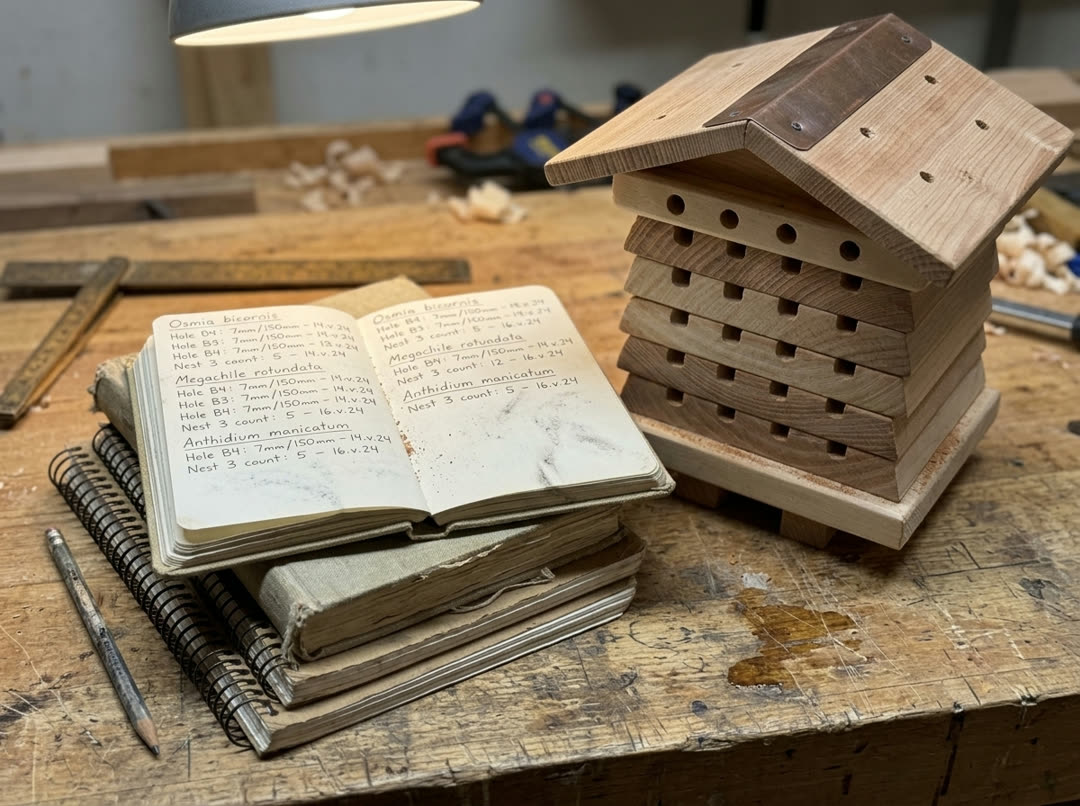
He smiles, looking back at his workbench. “I’ve since perfected the tunnel sizes and added the copper roof, but that original foundation is still out there. Every spring, without fail, the wild bees return to it. Year after year.”
This isn’t by chance. It is the result of breathable, premium wood, flawless weatherproofing, and a deep understanding of solitary bee behavior.
Best of all? They are completely safe around kids and pets. “People hear ‘bees’ and they get nervous,” Clayton chuckles. “But solitary bees have no colony or queen to defend. They are incredibly gentle. They virtually never sting. You can sit right next to this chalet on your patio and watch them work in peace.”
The End of an Era - And Your Last Chance
Clayton will permanently close his workshop door this season. “My hands just can’t do it anymore,” he says, stretching his weathered fingers. Severe arthritis in his joints has made the hyper-precise, millimeter-perfect milling required for the variable-diameter bee tunnels too painful to sustain.
“I have no successor,” he adds with a touch of melancholy. “My kids went into tech; nobody wants to spend days in a dusty workshop making artisan bee hotels anymore. These ones sitting on my shelves right now are the very last ones I will ever make.”
“For Me, This Is No Longer About Profit - It’s About the Legacy”
To ensure that his final batch of Blossoming Bees Bee Hotels finds a home in American gardens before the upcoming season, Clayton decided to take an unprecedented step: he is offering them directly online at a massive markdown.
“I don’t want them sitting in a warehouse. I want them standing in garden beds and hanging on walls, bringing life back to backyards across the country.”
His granddaughter, Chloe, helped him bring his life’s work online. “At my age, I don’t know anything about the internet,” Clayton smiles. “But Chloe told me that homeowners everywhere are looking for real, sustainable ways to help the environment. This is my contribution.”
Why Everyone Loves the Blossoming Bees Bee Hotel
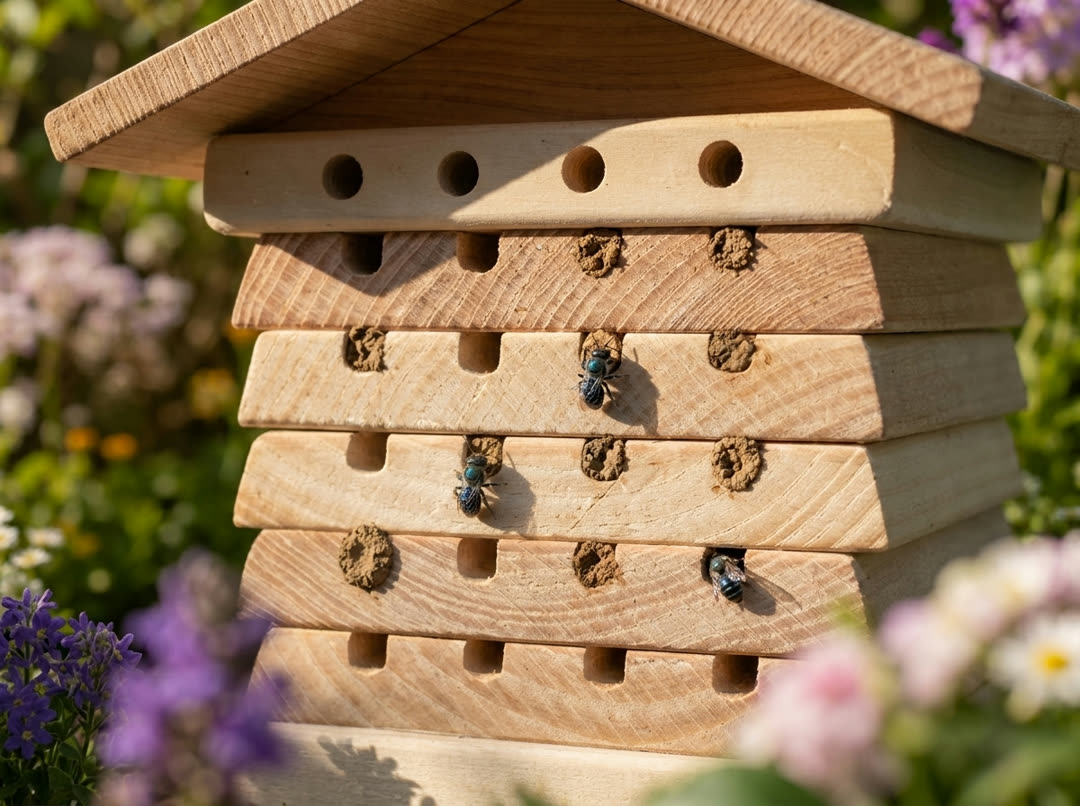
A Sanctuary for Them. A Masterpiece for Your Garden.
“Do you know the best part?” Clayton says, his eyes lighting up. “When a customer sends me a photo of a gentle little bee peeking out from one of my cedar tunnels... that’s when I know my work keeps living on, even after the workshop goes dark.”
The Blossoming Bees Bee Hotel is available exclusively on this page. Because this is Clayton’s final retirement batch, each piece is individually hand-milled, and inventory is strictly limited. Once the remaining stock is gone, this design will be retired forever.
Today, you can secure yours at the special 50% OFF retirement price of $59.99 (regularly $119.99).
Frequently Asked Questions
Is this the authentic Clayton Dawson design?
Yes. Genuine Blossoming Bees Bee Hotels are sold only here. We ship directly from the workshop to your door - no middleman, no cheap mass-produced lookalikes.
What if it gets damaged in the winter?
You don’t need to worry. This is 100% untreated premium cedar and heavy copper. It is built to weather decades of rain and snow naturally, without rotting or growing toxic mold.
When will the bees actually arrive?
Hang or place your chalet before spring. Solitary bees begin searching for nesting tunnels as early as March, and Clayton’s mixed-diameter design is built to attract several native species right through summer.
Clayton has just 29 chalets left on his workshop shelves. When they’re gone, the design retires with him for good. If you want one working in your garden this season, now is the time.
The publisher may receive compensation from purchases made through links on this page.